|
| Student using assistive technology |
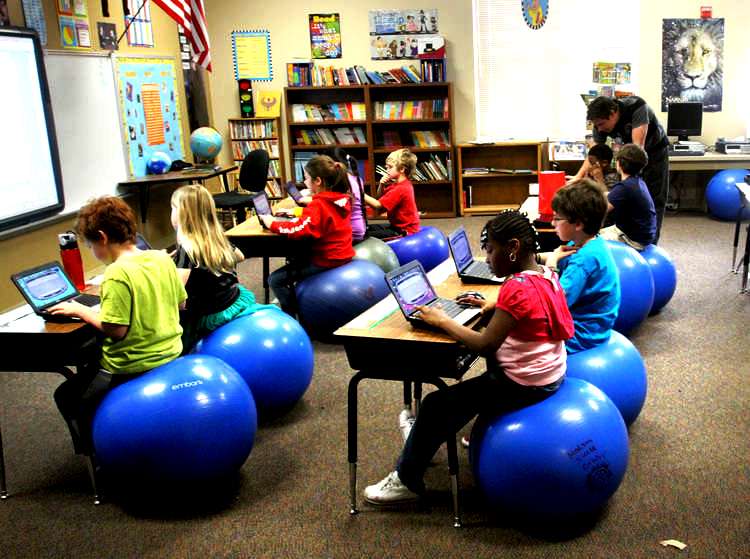 |
| Classroom of students doing a lesson on mobile devices |
Assistive technology and software suggests that the
technology is used to help adapt the curriculum for students with disabilities,
enabling them to perform tasks “on level”.
Technology and educational software is used in the
classroom to enhance the learning experience for the entire student cohort within
any given structured lesson, not just a task.
I have seen some parents and schools consider 1:1
programs and think that it would be the greatest salve for their child or students that
struggle with dyslexia or dyscalculia. The way I have come to understand assistive
technology, nothing can be further from the truth.
An assistive technology should be understood and
implemented apart from using any other type of device to enhance instruction.
For example text-to-speech is assistive technology software and Google Earth is
software that can enhance instruction. A dyslexic student is entitled to have
text-to-speech software and there should be personnel in the school to be sure
that every dyslexic student is empowered with this software.
Google Earth seems secondary to any text-to-speech
software and in a different area of student learning. It enhances instruction and has a different
purpose than text-to-speech. More students may benefit from Google Earth, but
none of them are legally entitled to Google Earth because it helps them access
the curriculum.
We know that students with special needs must be
integrated into the classroom. Most excellent teachers know that
differentiation benefits the entire class and get excited about deploying
brain-based learning techniques. So, it is time to integrate assistive technology
into the classroom too with ongoing professional development and technical experts
in the field.