 |
| Student using assistive technology |
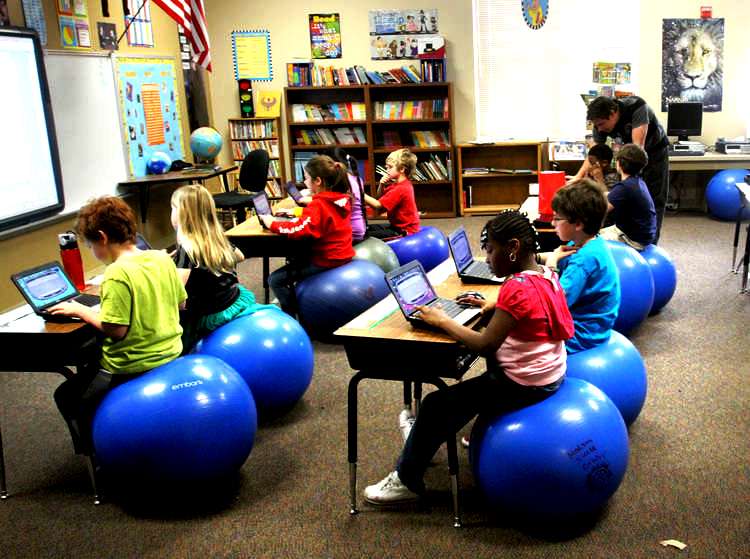 |
| Classroom of students doing a lesson on mobile devices |
Assistive technology and software suggests that the
technology is used to help adapt the curriculum for students with disabilities,
enabling them to perform tasks “on level”.
Technology and educational software is used in the
classroom to enhance the learning experience for the entire student cohort within
any given structured lesson, not just a task.
I have seen some parents and schools consider 1:1
programs and think that it would be the greatest salve for their child or students that
struggle with dyslexia or dyscalculia. The way I have come to understand assistive
technology, nothing can be further from the truth.
An assistive technology should be understood and
implemented apart from using any other type of device to enhance instruction.
For example text-to-speech is assistive technology software and Google Earth is
software that can enhance instruction. A dyslexic student is entitled to have
text-to-speech software and there should be personnel in the school to be sure
that every dyslexic student is empowered with this software.
Google Earth seems secondary to any text-to-speech
software and in a different area of student learning. It enhances instruction and has a different
purpose than text-to-speech. More students may benefit from Google Earth, but
none of them are legally entitled to Google Earth because it helps them access
the curriculum.
We know that students with special needs must be
integrated into the classroom. Most excellent teachers know that
differentiation benefits the entire class and get excited about deploying
brain-based learning techniques. So, it is time to integrate assistive technology
into the classroom too with ongoing professional development and technical experts
in the field.

I don't know what your county is like, but in mine, it seems like kids are "babied" for far too long. "If that kid gets some assistance, can't I have it too?" "It's not fair if he gets to use that but I don't." As a result I think a lot of kids have gotten used to accommodations that they don't need, even if they could benefit them to some extent. For example, I think a non-LD student would prefer having text read to them, but they certainly don't need it. They might claim it makes the learning easier, but I would argue it comes at the expense of learning close reading techniques. I never read much growing up and it showed up on my SAT scores. After the first time I took it I realized I needed to read more and get my reading comprehension level up. I spent the whole summer reading difficult books, and when I took the SAT again, my English score went up 110 points. I never "studied" for the SAT or took test prep materials....I just worked on skills I knew I needed to improve in practical ways.
ReplyDeleteInteresting.The only people who get accommodations here (Montgomery County Maryland) are people with a legal IEP, 504 with medical notes. My daughter has juvenile arthritis. Recently the doctor has said that writing is causing her fingers to swell, crack, accumulate fluid and said she should really be combing both typing and writing, varying her hand movements.
ReplyDeleteSo, I may have to go through the process of getting a 504 (likely) because in this district everything has to be very formal and legal. We are just outside Washington D.C and, I guess, everyone sues. But, I know that no one gets accommodations informally.
Demographically what tends to happens here is that families that do not succeed in getting an IEP or 504 from the public school, leave and use a private school. We have a large, vibrant private school system around here or they hire a lawyer or education consultant and litigate for accommodations.
Kids really ask for and get accommodations informally in your district? That is fascinating. That would be a different world here.
I have not had much experience with assistive technology. I thought you did a good job of breaking down the difference between assistive technology and educational technology. Couldn’t something like Google earth still be considered assistive if it makes learning easier for the student?
ReplyDelete